
Learning how to get customers to opt in to text messages is no longer optional for US businesses that want to run SMS marketing campaigns. Text message marketing converts at rates that crush email, but every promotional text you send requires explicit, documented consent. Skip the opt-in step and you risk carrier filtering, deliverability problems, and TCPA fines that start at $500 per message.
I built this guide after helping three small businesses launch SMS campaigns from scratch, watching them collect thousands of compliant subscribers the right way. Below, I’ll walk you through the legal basics, every opt-in method that actually works, copy-paste compliance language, and the exact playbook for turning opt-in into one of your highest-converting acquisition channels.
Table of Contents
What Is SMS Opt-In
SMS opt-in is the process of collecting a customer’s explicit, affirmative consent before you send them marketing or recurring text messages. The consent must be clear, documented, and freely given; a customer who never actively agreed to receive your texts is not opted in, no matter how you got their number.
Under the Telephone Consumer Protection Act (TCPA) and CTIA messaging principles, valid opt-in requires three things working together: an unchecked checkbox (or equivalent affirmative action), a clear disclosure of what the customer is signing up for, and an acknowledgment that message and data rates may apply.
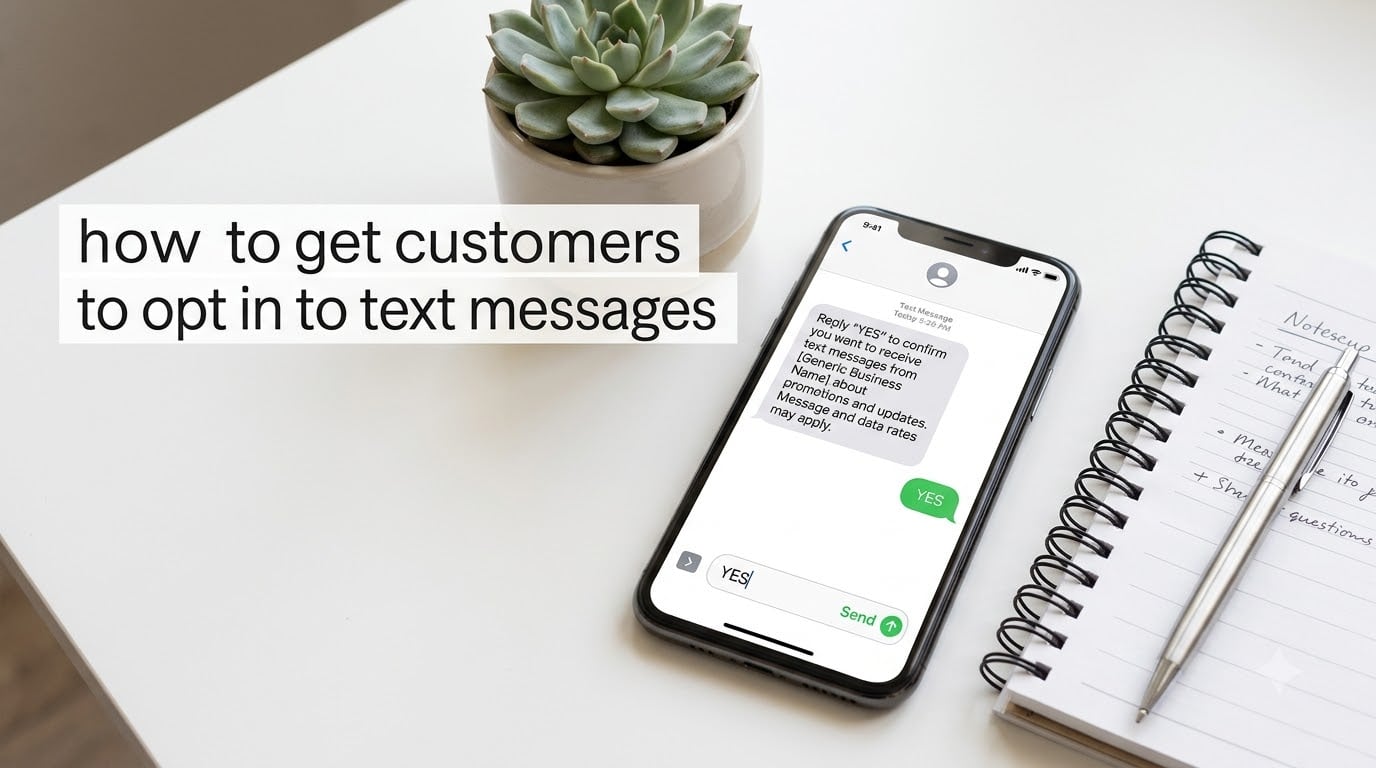
There are two flavors of opt-in. Single opt-in means the customer is subscribed as soon as they check the box or submit the form. Double opt-in adds a confirmation step; after submitting their number, the customer receives a welcome text asking them to reply YES, and only then are they added to your SMS marketing list. Double opt-in is the safest option and is required by many SMS platforms for promotional traffic.
Why SMS Opt-Ins Matter for Your Business
Proper opt-in isn’t just a legal checkbox. It directly impacts how many of your texts actually reach customers, how many get read, and whether your business stays in business after a complaint.
TCPA Exposure and the Real Cost of Non-Compliance
The TCPA allows private citizens to sue for $500 to $1,500 per unsolicited text. Class action settlements have hit eight figures for brands that texted from a list without documented consent. A single opt-in checkbox that was pre-checked, hidden, or buried in terms-of-service language can turn into millions in liability.
Carrier Filtering and Deliverability
Mobile carriers (Verizon, AT&T, T-Mobile) inspect traffic patterns and complaints. Lists built without real consent generate higher opt-out and spam-report rates. Carriers respond by throttling or completely blocking your messages, which means even your legitimate subscribers stop receiving them. Compliant opt-in keeps your sender reputation intact.
Engagement and Revenue Impact
Numbers I’ve seen across client campaigns confirm what the benchmarks suggest: SMS opt-in lists consistently produce 90%+ open rates and 30%+ click-through rates on promotional sends. Compare that to typical email metrics and it’s easy to see why a properly built SMS list becomes one of the highest-ROI channels a small business can run.
Legal Compliance Requirements
Before you collect a single phone number, you need to understand the four rules that govern SMS marketing in the United States.
TCPA Express Written Consent
The TCPA requires “prior express written consent” for marketing texts using an automatic telephone dialing system or prerecorded voice. For most modern SMS platforms, that means a clear, signed agreement from the consumer that includes:
- A clear statement authorizing you to send recurring marketing texts
- Disclosure of the types of messages (promotions, alerts, etc.)
- Notice that consent is not a condition of purchase
- Disclosure that message and data rates may apply
- The opt-out method (usually “Reply STOP to unsubscribe”)
- Your business identity and contact information
CTIA Messaging Principles
The Cellular Telecommunications Industry Association (CTIA) sets short code and 10DLC standards. Carriers enforce these even more strictly than the TCPA. CTIA requires an unchecked checkbox, a confirmation message, and a clear opt-out path before any promotional text goes out.
10DLC Registration for Local Numbers
If you’re sending application-to-person (A2P) messages from a standard 10-digit long code, you must register your brand and campaign through 10DLC. Without registration, carriers may refuse your traffic or apply heavy filtering. Registration involves vetting your business, your opt-in flow, and your sample messages; budget a few days for approval.
State-Level Rules Worth Knowing
Florida, Oklahoma, and Washington have stricter consent rules than federal law. If your customers live in those states, the bar for documented consent is higher. Build your opt-in flow with the strictest state in mind so you don’t have to rework forms later.
Warning: Sending a single marketing text to a number that never opted in can trigger a TCPA lawsuit. Always get explicit consent and keep timestamped records of how and when each subscriber joined your list.
Proven Opt-In Methods That Work
I’ve tested every major opt-in channel. Here are the four that consistently deliver compliant, high-quality SMS subscribers.
Web Form Opt-In
A standalone landing page or embedded form on your website is the most common opt-in method and the easiest to keep compliant. Place the form on a high-traffic page (homepage, blog sidebar, popup), keep the phone field optional, and include all required compliance language directly next to the checkbox.
Sample web form fields:
- First name
- Mobile phone number
- Unchecked checkbox with full compliance language
- Submit button labeled “Sign Up” or “Join Now”
Best for: E-commerce brands, SaaS companies, content publishers, and any business with steady website traffic.
Text-to-Join Keyword
Customers text a keyword like JOIN, START, or a brand-specific word (e.g., “Text PIZZA to 555-123”) to a short code or 10DLC number, then receive an automated reply asking them to confirm. This method works exceptionally well for in-store signage, event promotions, and social media ads.
The customer flow looks like this:
- Customer sees your keyword advertised
- They text the keyword to your number
- They receive an automatic response: “Reply YES to receive marketing texts from [Brand]. Msg & data rates may apply. Reply STOP to opt out.”
- Customer replies YES
- They’re added to your list and receive the welcome offer
Best for: Retail stores, restaurants, event organizers, and brands running offline-to-online campaigns.
Checkout Page Opt-In
Adding a checkbox at checkout captures customers who are already raising their hand to buy from you. The compliance rule here is non-negotiable: the box must be unchecked by default, and the customer must take affirmative action to subscribe.
Sample checkout language:
“Get 15% off your first order and exclusive SMS offers. Check the box below to receive recurring marketing texts from [Brand] at the number provided. Consent is not a condition of purchase. Msg & data rates may apply. Reply STOP to unsubscribe.”
Best for: E-commerce stores, especially Shopify and WooCommerce shops with established buyer traffic.
Paper Form Opt-In
For in-store sign-ups, restaurants, gyms, and event venues, a paper form with a handwritten phone number and signature still works, but the language must be identical to your digital opt-in. The signature creates the documented consent you need if a TCPA dispute ever arises.
Best for: Local service businesses, brick-and-mortar retailers, and event-based signups.
Compliance Language That Meets Legal Standards
Copy and paste these templates directly into your forms and welcome messages. I’ve adapted them from the CTIA Messaging Principles and best practices used by compliant SMS platforms.
Standard Web Form Checkbox Language
“By checking this box and submitting your phone number, you agree to receive recurring marketing text messages (including promotions and offers) from [Business Name] at the number provided. Consent is not a condition of purchase. Message and data rates may apply. Reply STOP to opt out, Reply HELP for help. View our Privacy Policy and Terms at [URL].”
Welcome / Confirmation Message Template
“Welcome to [Brand]! You signed up for marketing texts. Reply YES to confirm. Msg & data rates may apply. Up to 5 msgs/mo. Reply STOP to cancel, HELP for help.”
Opt-Out Confirmation Message
“You’ve been unsubscribed from [Brand] texts. You will not receive further messages. Reply HELP for help or visit [URL] for more info.”
Help Response
“[Brand] Support: We send marketing texts to subscribers. Msg & data rates may apply. Reply STOP to unsubscribe. More: [URL].”
Mandatory Elements Checklist
- Checkbox is unchecked by default
- Clear statement of what the customer is signing up for
- Disclosure that consent isn’t a condition of purchase
- Message and data rate notice
- Opt-out instructions (Reply STOP)
- Business name and contact details
- Link to Privacy Policy and Terms
Best Practices to Grow Your SMS List
Collecting opt-ins is one thing; collecting them at scale while staying compliant is another. These are the tactics that consistently move the needle.
Offer an Incentive
The fastest way to lift opt-in rates is to give something in return. A 10% discount, free shipping, early access to a sale, or exclusive content converts far better than a generic “stay updated” pitch. Just remember to disclose the offer clearly and ensure the incentive is delivered after confirmation, not before consent is documented.
Default to Double Opt-In
Even though it adds a step, double opt-in produces cleaner lists. Subscribers who confirm via text are demonstrably real, engaged, and reachable, which means fewer spam complaints and higher engagement metrics over time.
Optimize the Mobile Experience
More than 70% of your opt-in traffic is on a phone. Test the form on real devices. Make the phone field large enough to tap easily, keep the checkbox visible without scrolling, and avoid popups that block the page before the user can read the compliance language.
Time the Ask Right
Opt-in prompts convert best when the value is obvious: right after a purchase, after a customer service interaction, or in exchange for content the user already wants. Random popups on blog posts convert at single-digit rates; targeted post-purchase prompts routinely hit 20% and above.
Document Everything
Store the timestamp, IP address, opt-in source, exact checkbox language shown, and any referral URL. If a regulator or plaintiff ever questions your consent record, that documentation is your best defense.
Run Quarterly List Hygiene
Remove subscribers who haven’t engaged in 6+ months, suppress numbers that repeatedly fail delivery, and respect every STOP request within minutes, not days. Healthy lists outperform bloated ones on every metric that matters.
Frequently Asked Questions
How do I opt-in to text messages?
You opt-in to text messages by taking an affirmative action, like checking an unchecked opt-in box on a website, replying YES to a confirmation message after texting a keyword, or signing a paper form with the required disclosures. The opt-in must clearly state who is texting you, what kind of messages you’ll receive, that message and data rates may apply, and how to opt out.
What is the 3 text rule?
The 3 text rule is a CTIA best practice that limits how many messages a brand can send to a new subscriber before receiving explicit confirmation. In practice, it means you should send no more than three messages to an unconfirmed opt-in before they must reply YES to remain subscribed. Following the rule keeps your sender reputation strong.
Do opt-out texts cost money?
Standard STOP and HELP replies are typically free to the subscriber, though carriers and platforms handle this differently. Replying STOP to unsubscribe should never generate a premium charge, and your opt-out confirmation message should clarify that no further texts will be sent.
What is double opt-in for SMS?
Double opt-in for SMS is a two-step consent process. The customer first submits their number through a form or text-to-join keyword, then receives a confirmation message asking them to reply YES. Only after that second affirmative reply are they added to your marketing list. Double opt-in reduces spam complaints and improves list quality.
Are unsolicited marketing texts illegal?
Yes. Unsolicited marketing texts sent without prior express written consent violate the TCPA and most state laws. Violations can result in $500 to $1,500 per message in statutory damages, plus carrier filtering and potential class-action lawsuits. Always collect documented opt-in consent before sending promotional texts.
Conclusion
Knowing how to get customers to opt in to text messages is the foundation of any compliant SMS marketing program. Pick the right opt-in methods for your audience (web form, text-to-join keyword, checkout, or paper), use the exact compliance language above, default to double opt-in, and document every subscription.
Start with one opt-in method, get it dialed in, and expand from there. In October 2026, the brands winning at SMS marketing are the ones that treated opt-in as a long-term asset instead of a shortcut to a quick send.